A profile of Osheen Harruthoonyan exploring his experimental analogue photography and the relationship between memory, identity and displacement. The feature examines his manipulation of film negatives and the influence of family history, science and migration on his work.
Osheen Harruthoonyan
Iran/Canada — Ones to Watch
Words by Dalia Al-Dujaili
British Journal of Photography, June 2026, pp. 108–114
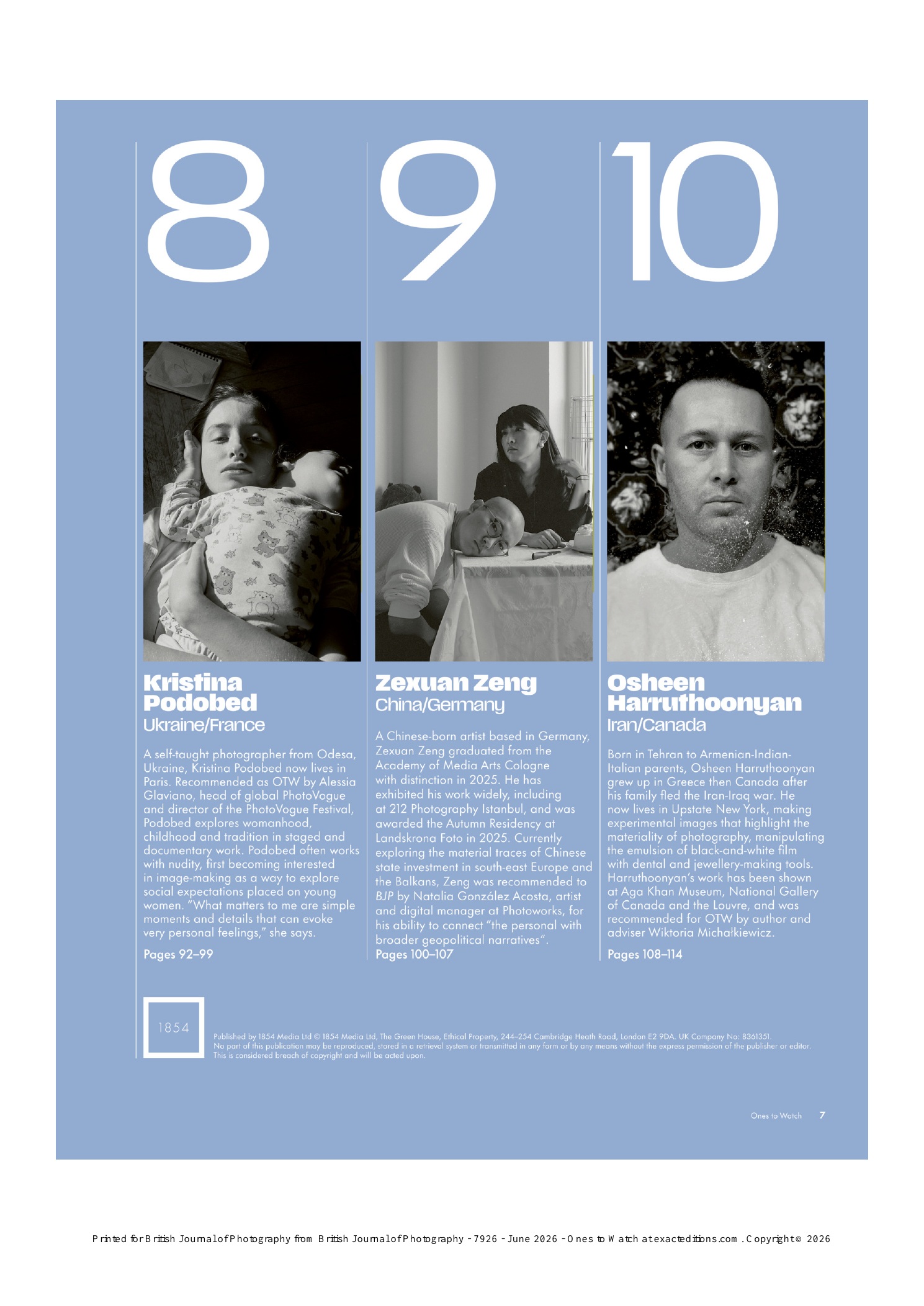
Osheen Harruthoonyan has had an unusual life. Born in the Iranian capital Tehran to Armenian-Indian-Italian parents, he grew up in Greece and then Canada after his family fled the Iran-Iraq war in the 1980s. He now lives in Upstate New York, and is calling me from there. “I’ve grown up having this super fragmented history and intergenerational trauma,” he says. “I have always had a fascination with memory and identity and history, especially as an Armenian. I have a history of genocide in my family history. I have been really interested in how to tell stories of your family history with one foot in the West and one foot in the East. And how do you hold those memories of your ancestors, but also how do those stories come through you?”
Harruthoonyan studied cinematography and his work has been featured in the Boston Public Library, Aga Khan Museum, National Gallery of Canada and the Louvre. His work experiments with form, highlighting the chemical process of photography as a technology, and was initially driven by a desire to express himself without words. “I lost my Farsi and then I was fluent in Armenian but I couldn’t use it because I was in Athens. And then we were sent to Canada [where] I didn’t speak any English,” he explains.
Harruthoonyan became interested in theoretical physics, quantum mechanics and biology “in relation to memory and history and identity – there’s this constant question of having gone through so many borders as a child and learning how to communicate without language”. Eventually his desire to communicate took over and, moving from Vancouver to Toronto, he got a studio. He taught himself photography, and “started figuring out a way to manipulate negatives in order to tell the types of stories I needed to tell”.
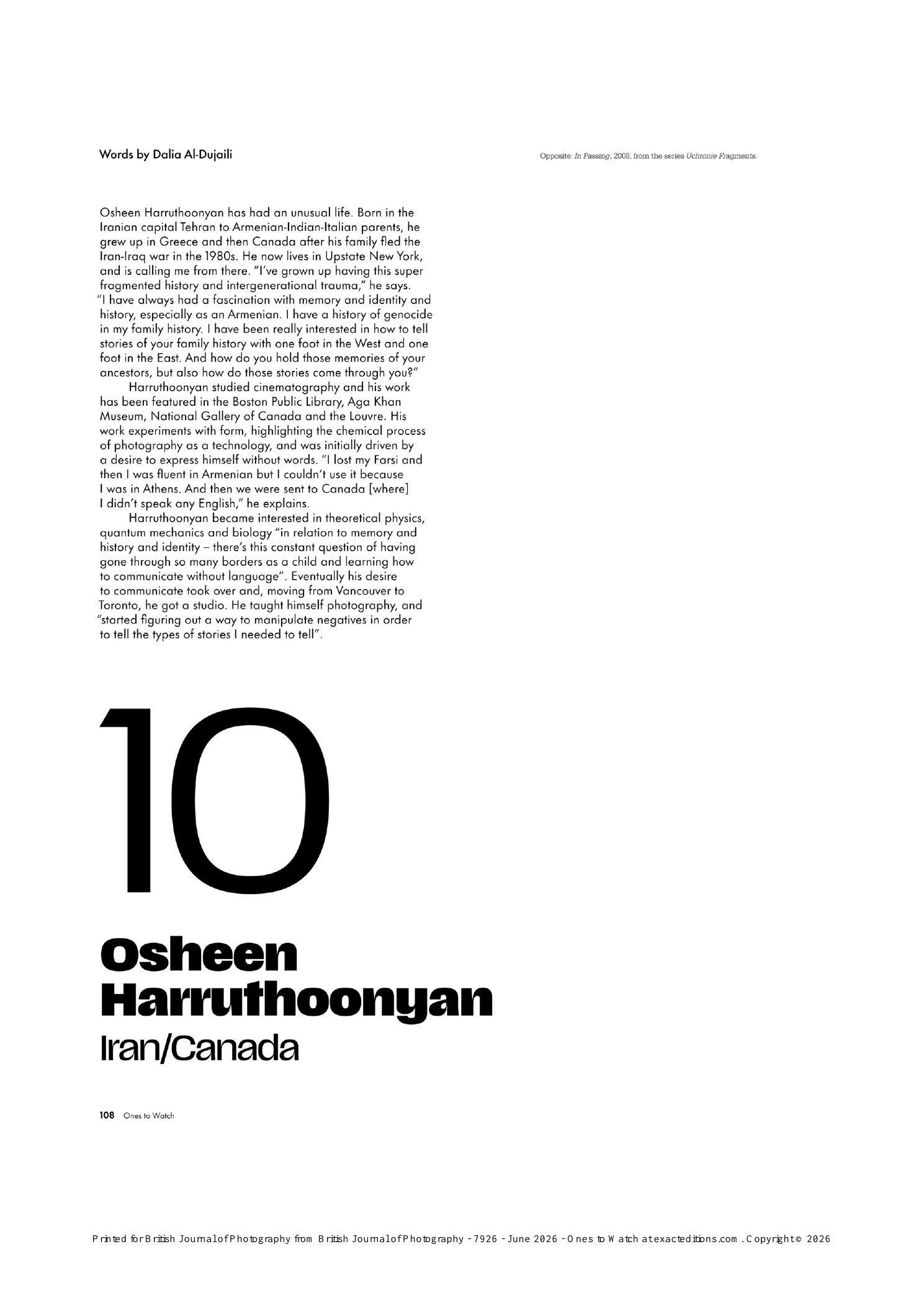
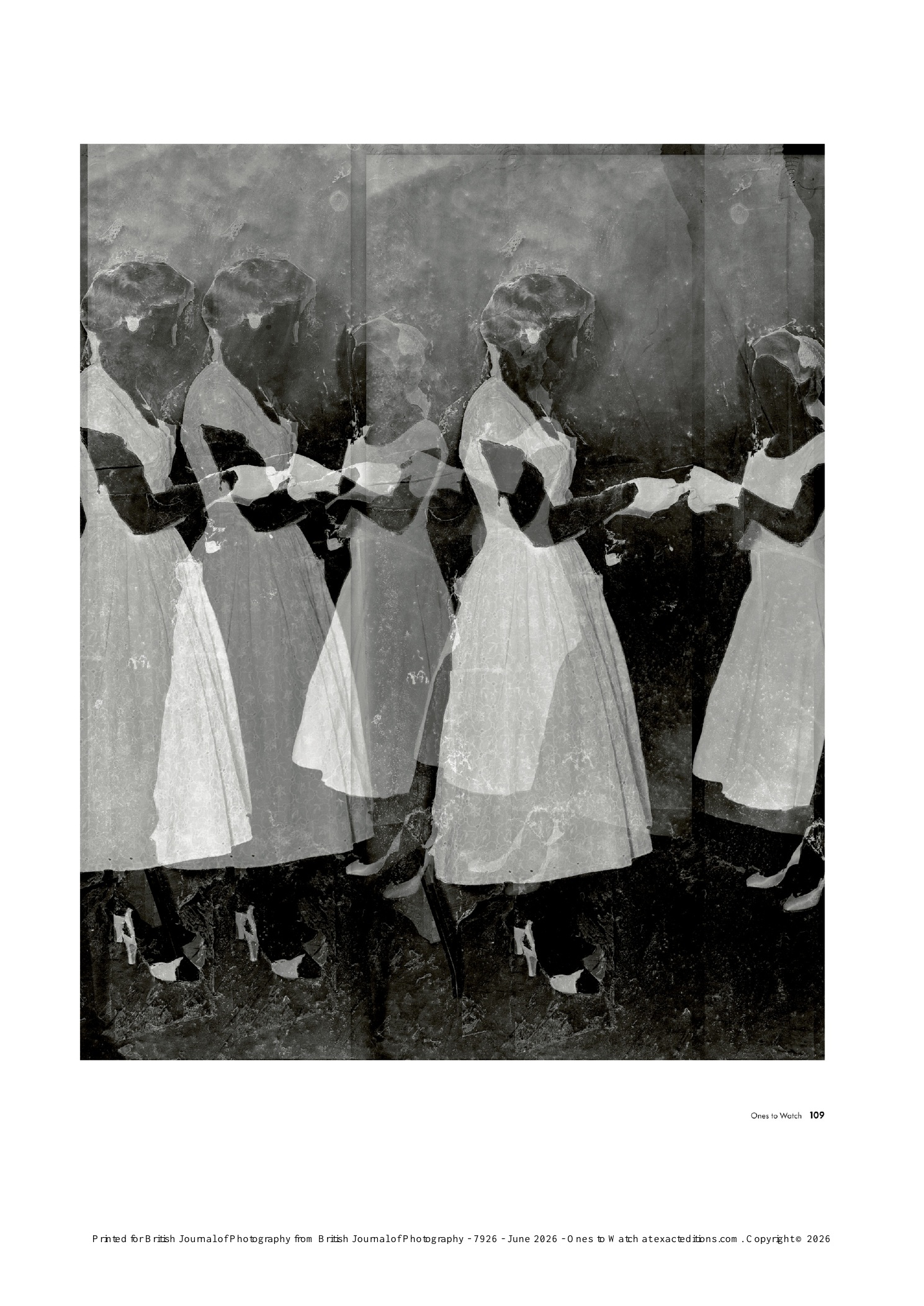
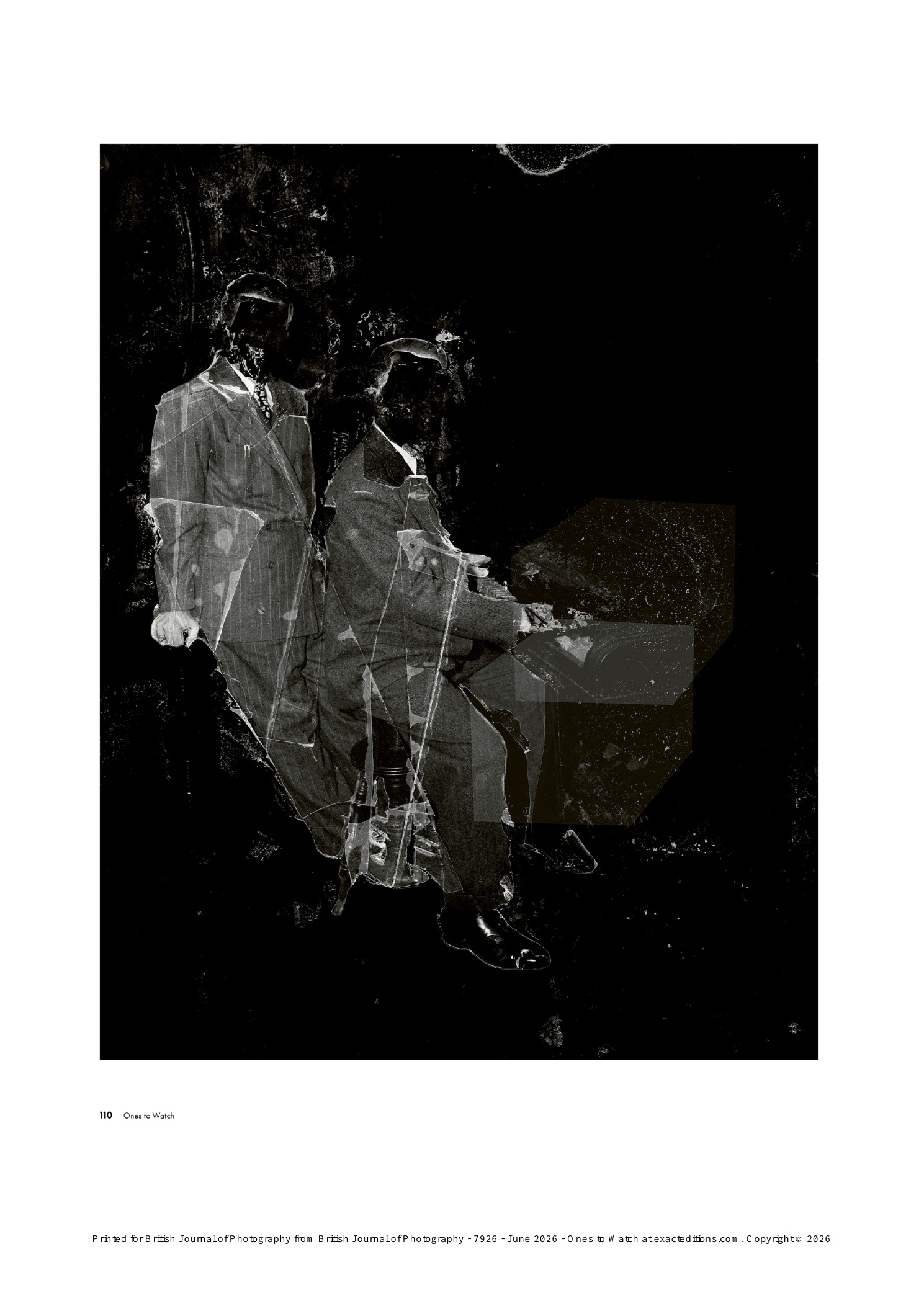
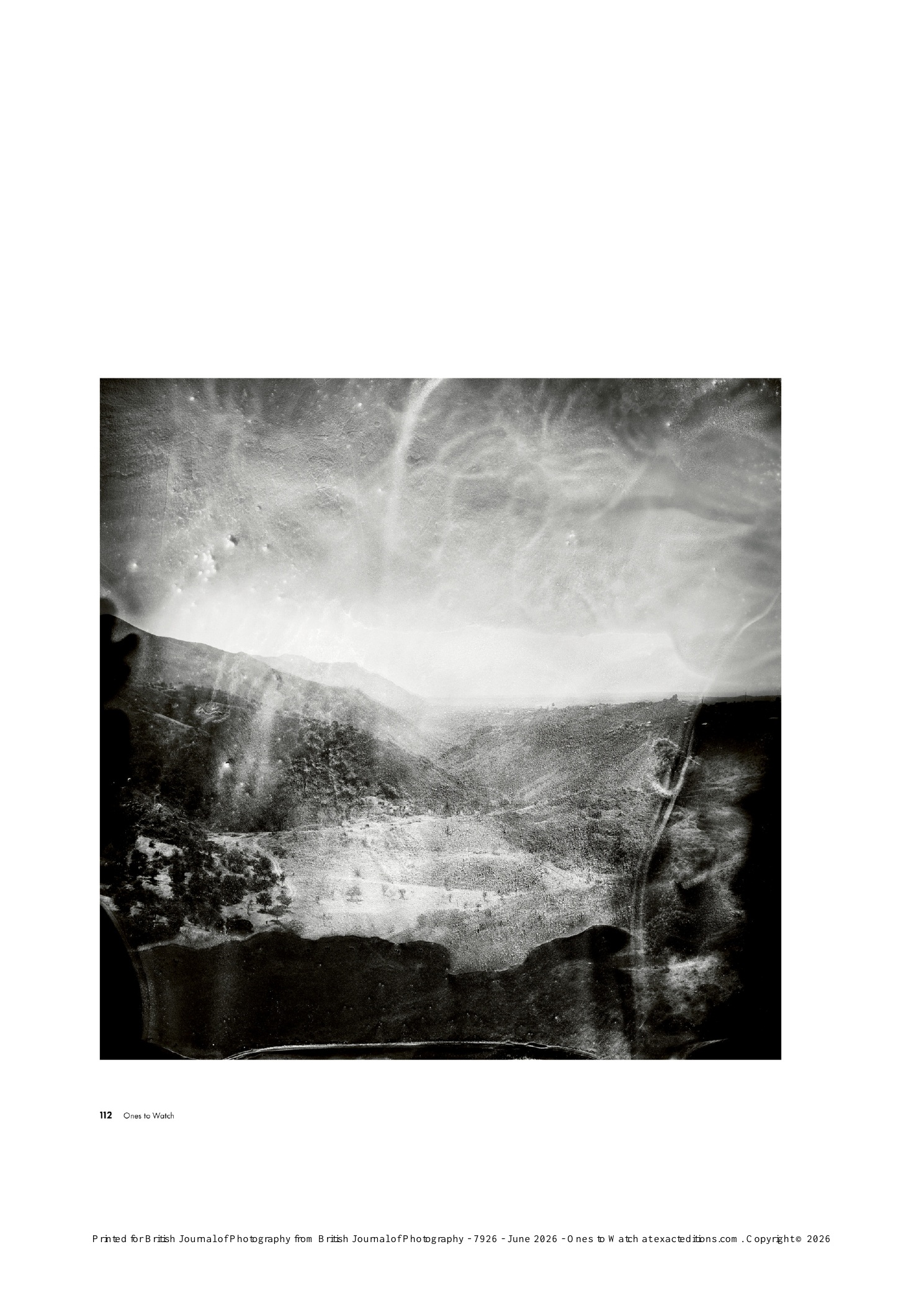
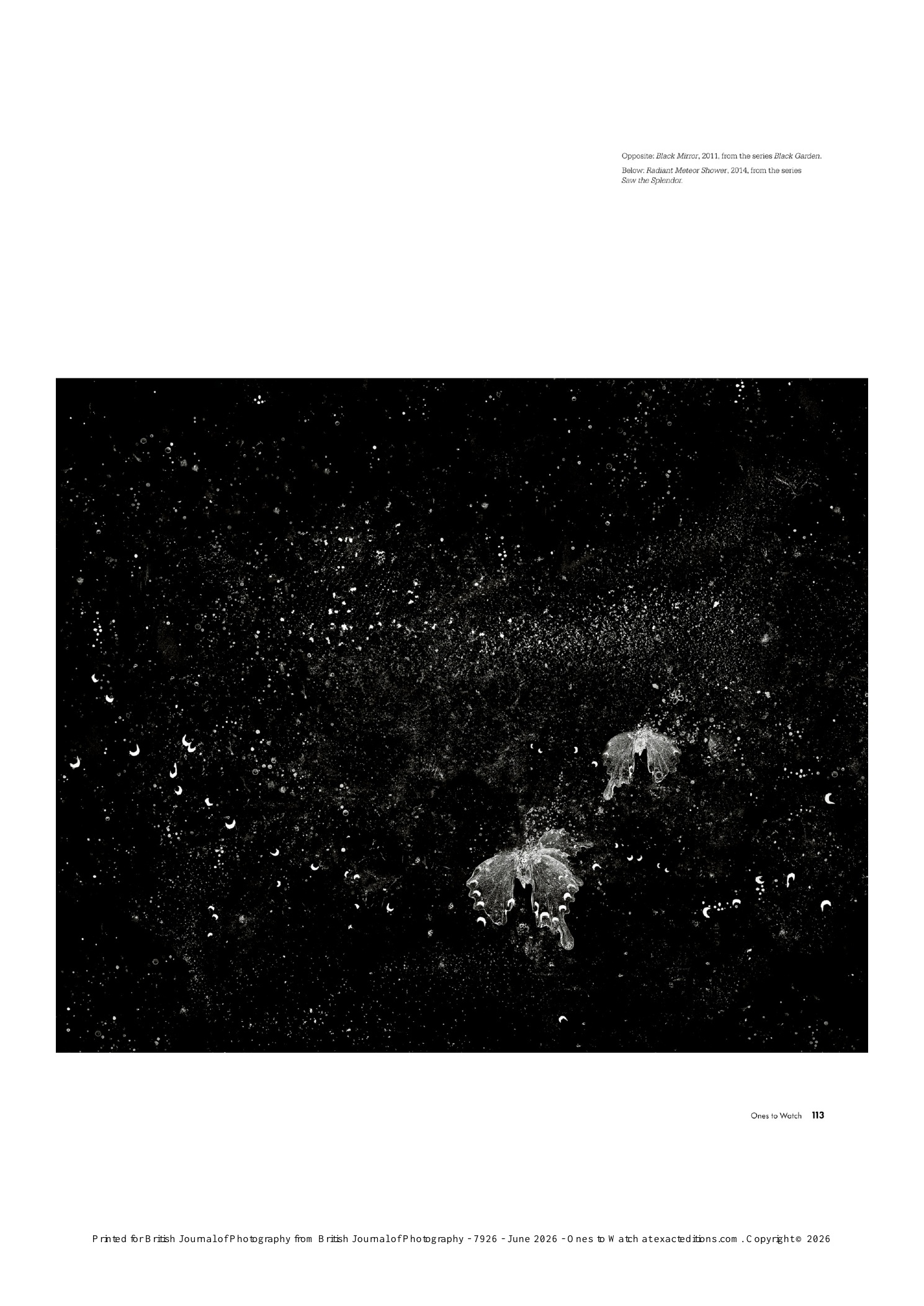
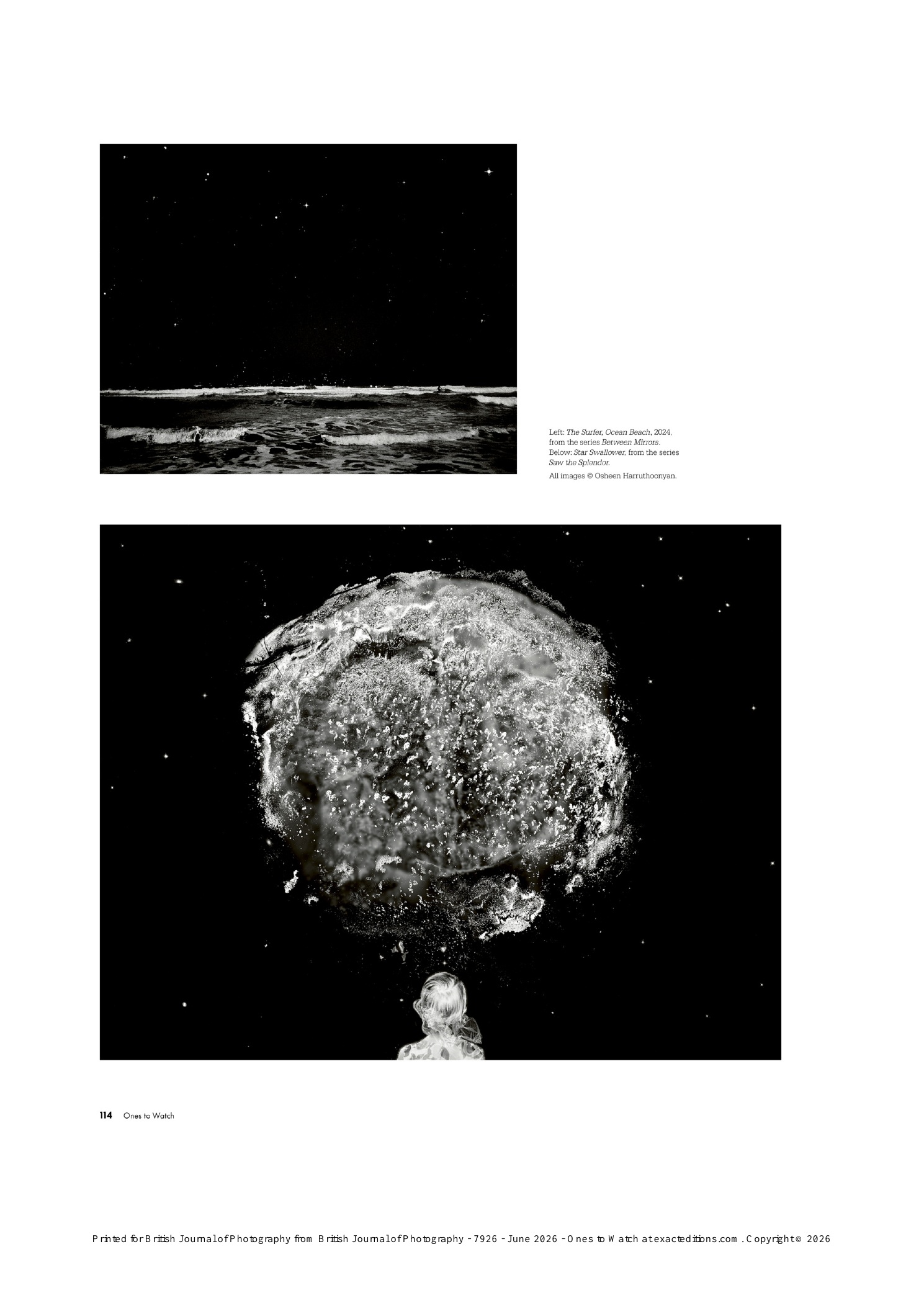
His interest in image-making retains a scientific edge; he has invented a chemical process to manipulate black-and-white film, he says, which turns the emulsion into what he describes as a “honey-like consistency... So I can sculpt it, I can manipulate it with various tools,” he explains. “I use a lot of dental tools and jewellery-making tools, and it’s all done in petri dishes under a magnifying glass. Once that’s complete, I print the image in the darkroom. So it’s all analogue.”
This approach has helped him make series such as Uchronie Fragments, which explores shards of time and place that no longer exist. It expands on an earlier body of work, Elephants, which examined how memory and identity shift in response to trauma. The title of the later series references French ‘uchronie’ novels – stories set in alternate realities or imagined timelines, places that never truly existed but still feel eerily familiar.
“One of the images draws from a memory my grandfather shared about meeting my grandmother at a dance in India,” Harruthoonyan says. “The multiple exposures reflect how memory functions over time – each retelling subtly alters the story, like a game of Telephone. The details shift but the essence remains.”
Time, process and memory also inform his love of analogue processes. “Digital photography, for me, is too immediate,” he says. “It lacks that moment of reflection and meditation. I can spend an entire day in the darkroom and it’s the most peaceful thing ever.” The unpredictability of the process is central to his practice. “It allows for happy accidents,” he explains. “When I’m working on a negative – removing parts of hands or faces – there’s an endless sense of discovery. There’s no undo button. You can’t just go back a few steps. You have to stay with it, and that keeps you curious.”
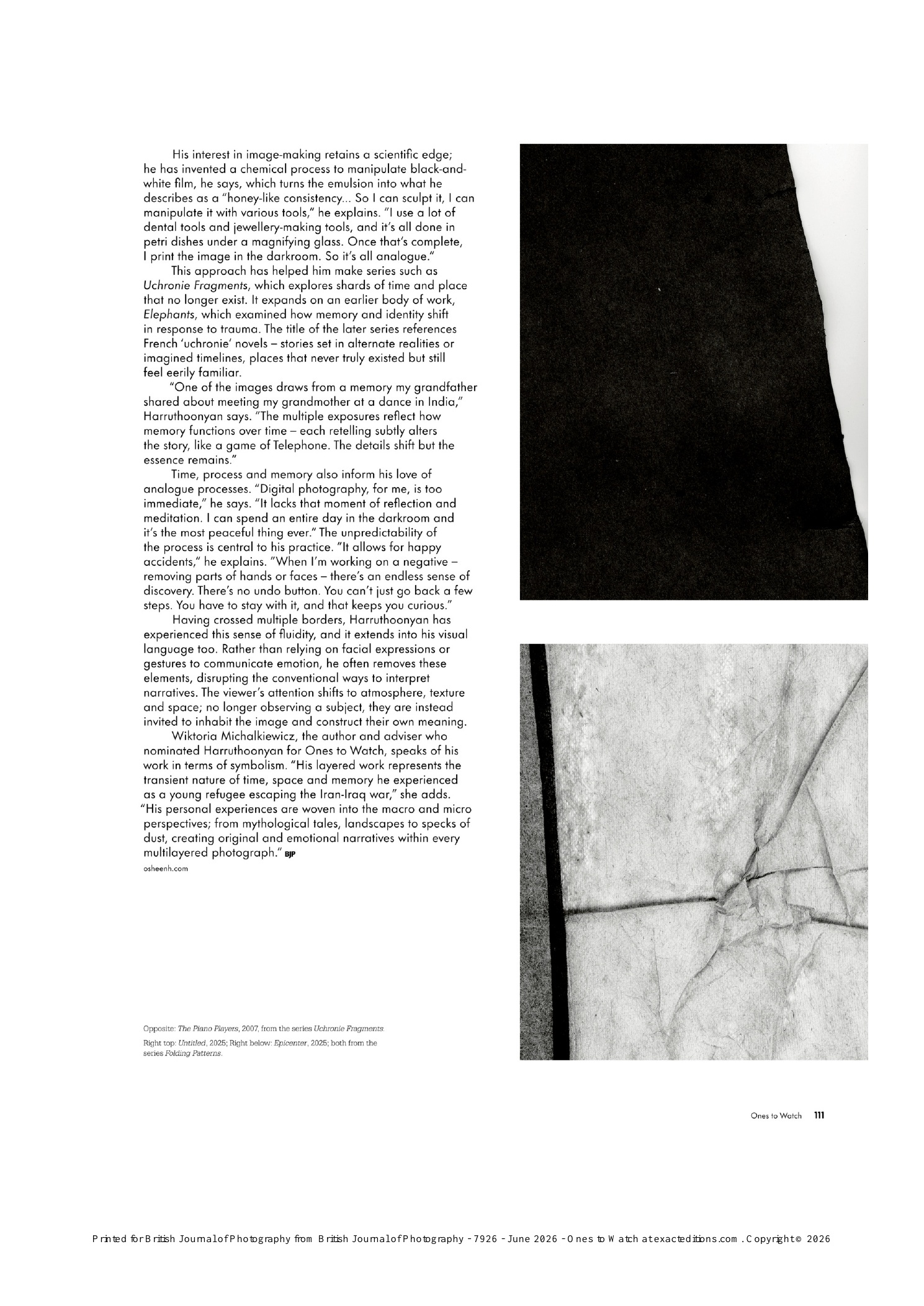
Having crossed multiple borders, Harruthoonyan has experienced this sense of fluidity, and it extends into his visual language too. Rather than relying on facial expressions or gestures to communicate emotion, he often removes these elements, disrupting the conventional ways to interpret narratives. The viewer’s attention shifts to atmosphere, texture and space; no longer observing a subject, they are instead invited to inhabit the image and construct their own meaning.
Wiktoria Michalkiewicz, the author and adviser who nominated Harruthoonyan for Ones to Watch, speaks of his work in terms of symbolism. “His layered work represents the transient nature of time, space and memory he experienced as a young refugee escaping the Iran-Iraq war,” she adds. “His personal experiences are woven into the macro and micro perspectives; from mythological tales, landscapes to specks of dust, creating original and emotional narratives within every multilayered photograph.”